
You baked on Sunday. By Tuesday the paper bag gave you a rock, and the plastic one gave you a soft, sad crust. So is wax-lined cotton any better?
Do beeswax bread bags work? Yes, within limits. The wax lining slows drying, so a whole crusty loaf stays good for a few days at room temperature. The bag is not airtight and it does not stop mold in a humid kitchen. Cool the bread fully first, close the top well and freeze what you will not eat soon.
So, do beeswax bread bags work well enough to replace plastic? For whole, crusty loaves, mostly yes. For soft sliced bread, not really. This guide covers how they work, how long bread lasts, where they fall short and how to look after one.
Do beeswax bread bags work, and how?
A loaf goes bad in three different ways. It dries out. It goes stale. Or it grows mold. No single bag fixes all three.
Drying is the one a bag can help with. Plain cotton lets moisture leave fast. Plastic holds nearly all of it in. A beeswax lining sits in the middle. Beeswax repels water, as the overview of beeswax on Wikipedia explains, so the lined cloth slows the loss of moisture without sealing the loaf up.
That middle ground is the whole point. The crumb keeps more of its moisture. The crust does not turn to leather overnight.

There is one thing no bag can stop, and it starts the minute the loaf leaves the oven.
Why does bread go stale even in a good bag?
Stale is not the same as dry. As bread cools, its starch slowly turns back into a firm, crystal form. Bakers call this retrogradation. The Perfect Loaf's guide to storing bread walks through the science and notes that reheating can bring some softness back for a short while.
It also points out some good news. Sourdough tends to hold off staling and mold longer than bread made with packaged yeast. The acid in the dough does that work. The bag just helps it along.
Does the fridge help? It depends on what you are fighting. Cold slows mold. But it also speeds up staling, which is why America's Test Kitchen advises against storing bread in the refrigerator. Some bag makers still suggest it, mainly for warm, damp homes.
Here is a simple rule. Eating it within a few days in a normal kitchen? Use the counter. Hot and humid, with mold by day two? Use the fridge and toast your slices. Need a week or more? Use the freezer.
How long does bread last in a beeswax bag?
There is no single number. Crust, climate and the cut side all matter. These ranges are typical for home kitchens, not a promise.
| Storage | Whole crusty loaf | Crust | Best for |
|---|---|---|---|
| Paper bag | 1 to 2 days | Stays crisp, then hard | Bread you eat today |
| Plain cotton bag | 1 to 2 days | Firm | Baguettes and rolls |
| Beeswax-lined bag | 3 to 5 days | Firm, slightly soft | Sourdough and country loaves |
| Plastic bag | About 3 days | Soft | Sandwich bread |
| Freezer, well wrapped | Weeks | Comes back in a hot oven | Bread you bake ahead |
See how lined cotton and plastic land close together on days? The difference is the crust. If you bake for the crust, that matters.
The bags this guide is built around
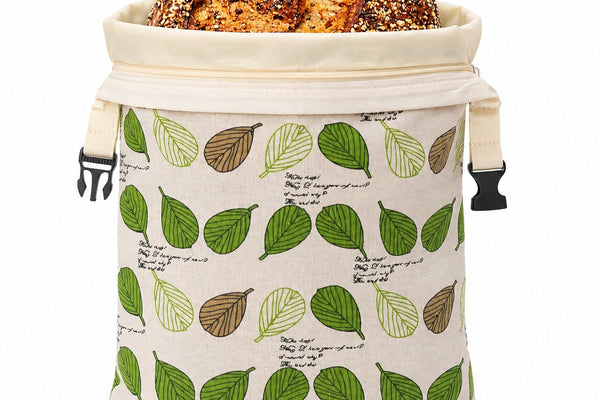
Set of 2 · 17 x 12 in · free US shipping over $40

Most bad results come down to one mistake, and it happens before the bag is even closed.
How to use a beeswax bread bag
Cool the loaf all the way
This is the mistake. A warm loaf gives off steam. Trap that steam and you get a wet crust and early mold. Wait until the base feels cool in your hand. A big loaf can take two hours or more.
Press out the air and roll it down
Slide the bread in, flatten the empty part of the bag and roll the top down. If there is a buckle, click it shut. Less air around the loaf means slower drying.
Store it cut side down
Once you slice, the open face dries first. Set the loaf cut side down inside the bag. Slice only what you need.
Freeze the rest
Baked two loaves? Put one away on day one, while it is fresh. Freezing a stale loaf only keeps it stale.

What are the downsides?
Are they perfect? No. These are the honest trade-offs:
- They are not airtight. Bread still dries, only slower.
- They do not kill mold. In a damp kitchen, check the loaf every day. If you see mold, throw the loaf out. Do not cut around it.
- They hate heat. No dishwasher, no hot water, no sunny windowsill. Wax softens and moves.
- They wear. The lining thins with use. Some people re-wax a bag after a year. Others retire it.
- They hold crumbs. Seams need a shake after every loaf.
Cleaning sounds fussy. It takes about a minute, if you skip one thing.
How do you clean a beeswax bread bag?
Skip the hot water. That is the one thing. Heat melts the wax out of the cloth.
- Turn the bag inside out and shake off the crumbs.
- Rinse with cool water. Add a little mild soap if it needs it.
- Hang it to air dry, fully open.
Make sure it is bone dry before the next loaf goes in. A damp lining is the fastest way to grow mold. Having two bags helps here. One can dry while the other is in use.
Which beeswax bread bag should you buy?
Look at four things. Size comes first: a round loaf from a standard Dutch oven needs width as well as length. Next is the closure. A drawstring leaves a gap, while a roll top closes flat. Then check the lining covers the whole inside. Last, check the care label.
Our beeswax-lined sourdough bread bags come as a set of two. Each is 17 x 12 in, in cotton canvas with a roll-top buckle that also works as a handle. They are freezer safe. They are lined and reusable, but they are not airtight, for all the reasons above.

Still building up your baking habit? Start with our guide on how to make sourdough starter. For what goes on the toast, see how long butter can sit out. And a good board keeps crumbs in one place: here is end grain vs edge grain.
One last question decides it: how fast do you finish a loaf?
The short answer, by household
Finish a loaf in a day? A paper bag is fine. Take three to five days? This is where a lined bag earns its place. Take more than a week? Slice it, freeze it and toast from frozen.
Want to read more on the science? The page on staling is a clear, short start.
FAQ
How long does bread stay fresh in a beeswax bag?
Plan on a few days at room temperature for a whole, fully cooled loaf. Three to five is common for sourdough. Humid kitchens get less, and cut loaves dry faster from the open side.
What are the disadvantages of beeswax bread bags?
They are not airtight, so bread still dries slowly. They need a cool hand wash, never hot water. The wax wears down with use, and a humid kitchen can still grow mold on the loaf.
Can you get mold out of a beeswax bread bag?
A light spot on the outside may wash out with cool water and mild soap. If mold has reached the lining, replace the bag. Hot water would kill more, but it also melts the wax.
Do beeswax bread bags work on store-bought bread?
They work on unsliced bakery loaves. Soft sliced sandwich bread stays softer in its own plastic bag, because it has no thick crust to protect it.
Can you freeze bread in a beeswax bag?
Yes, if the bag is sold as freezer safe. Cool the bread fully, press out the air and roll the top tight. For more than a few weeks, add a second layer around the loaf.
Thank you. A note from Lisa with your 10% code is on its way.

Leave a comment