
A matcha latte is a creamy beverage made by whisking ceremonial-grade matcha powder with hot water and steaming milk, originating from Japanese tea ceremonies but popularized by modern cafes. The matcha latte that makes you stop ordering them from cafes. Sixty seconds in your own kitchen. We have made this drink approximately 2,000 times across three apartments and a studio. Here is the version that works every time.
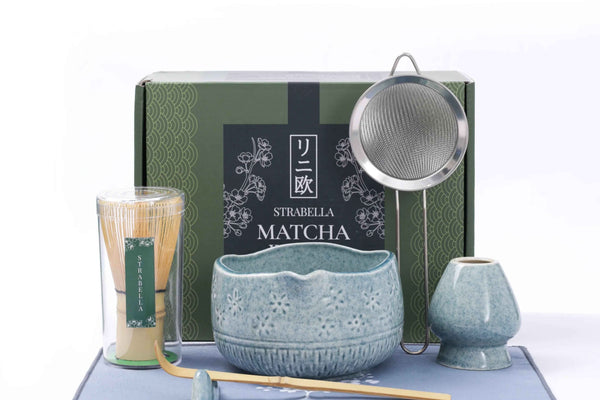
What you actually need: two items. The Ceremonial Matcha Tin ($49, 54g single-origin Uji, about 27 lattes) and the Matcha Whisk Set ($55.00, whisk, bowl, and sifter in one box). That is roughly $99 for the full cafe setup, and every step below uses them.
A smooth latte starts with good matcha and a bamboo whisk. We use our single-origin Ceremonial Matcha (first tin 39% off — $29.89 with code FRESHMATCHA) and the 7-piece Whisk Set ($55.00, rated 4.6 from 51 verified reviews).
Why Most Homemade Matcha Lattes Fail
Three common mistakes ruin 90% of homemade matcha lattes. The matcha clumps because no one sifted it first. The bitterness occurs because water temperature exceeded 175°F instead of the optimal 170°F. The texture disappoints because a spoon or milk frother was used instead of a traditional bamboo whisk (chasen). Professional baristas always sift matcha powder to prevent clumping and achieve smooth texture.
Essential Matcha Latte Equipment (5 Items)
Five tools create cafe-quality results:
- Ceremonial-grade matcha powder. Single origin provides the best flavor profile. Our Strabella Home Ceremonial Matcha Powder sources directly from Uji, Japan.
- Bamboo whisk (chasen). Prong count directly affects foam creation — the Madake chasen in our whisk set carries 100 tines. Synthetic alternatives cannot replicate the traditional whisking action.
- Fine wire mesh sifter. Removes clumps before they contact liquid, ensuring smooth dissolution.
- Wide ceramic bowl or mug. Minimum 4-inch diameter allows proper whisk movement. Our Strabella Home Matcha Whisk Set includes bowl, whisk, and sifter.
- Temperature-controlled water (170°F). Digital thermometer ensures precision, or let boiling water cool for exactly 90 seconds.

The ceremonial-grade powder this recipe calls for — first harvest, stone-ground, about 27 lattes per tin. Subscribe & save is available if this becomes a daily drink.
Shop the Ceremonial Tin →
The 100-tine Madake chasen, 4.8in ceramic bowl, and wire sifter that steps 1-3 depend on — every tool from the list above in one box.
Shop the Whisk Set →For iced variations, add a tall glass and cold milk.
60-Second Hot Matcha Latte Recipe
This recipe yields one 8-ounce matcha latte using traditional Japanese whisking techniques.
- Sift 1 teaspoon (2g) matcha powder through fine mesh into warmed bowl. (15 seconds)
- Add 2 ounces of 170°F water. Never use boiling water—it destroys delicate flavor compounds and creates bitterness.
- Whisk in rapid M-shaped motions for 15 seconds using bamboo chasen. Avoid circular stirring. Foam develops around second 12.
- Steam 6 ounces milk to 150°F. Oat milk mimics cafe texture. Whole milk provides richness. (30 seconds)
- Pour steamed milk over whisked matcha. Consume immediately for optimal temperature and foam retention.
Total preparation time: 60-75 seconds after initial practice. The M-shaped whisking motion is essential for proper foam development in traditional matcha preparation.
What this recipe uses
Free US shipping over $25 · packed and shipped from Newport Beach, California
Related: Our oat milk matcha latte recipe — ratios from the 7-milk test
Iced Matcha Latte Technique
Follow steps 1-3 above, then:
- Fill 12-ounce glass with ice cubes. Our fluted Strabella Home Glass Matcha Cups showcase the green-to-white gradient.
- Pour whisked matcha over ice slowly. Rapid pouring disrupts layering.
- Add cold milk until glass is 90% full. The hot-then-cold sequence ensures complete matcha dissolution.
Pre-whisking matcha in hot water is crucial for iced drinks because matcha powder will not dissolve properly in cold liquid.
Five Premium Iced Matcha Variations
- Vanilla Matcha: Add ½ teaspoon vanilla extract to glass before adding matcha
- Strawberry Matcha: Muddle 3 fresh strawberries in glass bottom, strain if desired
- Cold Foam Matcha: Froth cold milk separately, float on surface for cafe presentation
- Honey Lavender Matcha: Dissolve 1 teaspoon honey + pinch dried lavender in hot matcha step
- Espresso Matcha Fusion: Add one frozen espresso ice cube for gradual coffee integration
Alternative Tools: Frothers vs. Traditional Methods
Milk frothers work adequately for milk preparation but cannot replace bamboo whisks for matcha. Blenders over-aerate and destroy delicate foam structure. Shaker bottles create clumping as powder adheres to container walls. Traditional bamboo whisks remain superior for matcha preparation due to their specific prong design and whisking mechanics.
Cost Analysis: Homemade vs. Cafe Matcha Lattes
Per-cup breakdown for homemade matcha latte:
- Ceremonial matcha (1 tsp): $1.10 (from $49/27-serving container)
- Oat milk (6 oz): $0.35
- Water and ice: $0.05
- Total per cup: $1.50
Starbucks iced matcha latte averages $6.75. Making matcha lattes at home saves approximately $1,825 annually for daily drinkers, with equipment paying for itself within 14 days.
Troubleshooting Bitter Matcha Taste
Resolve bitterness using this diagnostic sequence:
- Verify sifting: Unsifted clumps concentrate bitter compounds
- Check water temperature: Above 175°F scorches delicate matcha
- Assess matcha age: Oxidation occurs after 3 months of air exposure
- Confirm grade: Culinary-grade matcha requires sweetening for pleasant taste
Frequently Asked Questions About Matcha Lattes
How much matcha powder should I use per cup?
Use 1 teaspoon (2 grams) per 8-ounce serving. For stronger flavor, increase to 1.5 teaspoons maximum—higher amounts typically produce unpalatable bitterness.
What type of milk works best in matcha lattes?
Oat milk provides the closest cafe-style texture and neutral flavor. Whole milk offers maximum creaminess. Almond milk works for lighter drinks. Avoid coconut milk as it overpowers matcha's subtle flavor. We timed the foam on 7 milks side by side in our best milk for matcha latte test.
Can you make matcha latte without bamboo whisk?
Electric milk frothers can substitute but produce flatter texture with less traditional foam. Bamboo whisks cost $15-20 and last 6-12 months, making them worthwhile for authentic results.
How long does opened matcha powder stay fresh?
Ceremonial matcha maintains peak flavor for 3 months when stored in airtight containers away from light and heat. Our Strabella Home ceramic storage tin preserves freshness for the full period.
Is matcha healthier than coffee?
Matcha contains 70mg caffeine versus coffee's 200mg, plus L-theanine amino acid which promotes calm alertness without crash. Choose based on desired caffeine level and taste preference rather than health claims.
The beginner's matcha guide
The 8-page PDF that breaks down why matcha clumps, the three fixes, the right tools, and 5 iced recipes. Free, one email, unsubscribe in a click.
No spam. One welcome email + the PDF. From Lisa, Strabella.

Leave a comment