
An eco friendly dish drying mat is typically made from one of three materials — diatomaceous earth (diatomite stone), bamboo fiber, or recycled microfiber — each with different drying speeds, maintenance needs, and lifespans. If you want the fastest-drying, lowest-maintenance option, a diatomite stone mat is the strongest choice for most kitchens. If you prefer something soft, machine-washable, and compact, a microfiber or bamboo-blend mat may suit you better.
This guide compares all three material types honestly, walks through which mat works best for different kitchen setups, and highlights specific Strabella Home products where relevant — so you can make a confident, informed decision rather than a hopeful one.
How We Evaluated
We assessed each material category based on manufacturer-reported specifications, documented user experience patterns, and publicly available information about material composition and care. We did not conduct independent lab testing, and drying times or durability estimates are expressed as typical ranges rather than guaranteed figures. Where product claims are cited, they reflect manufacturer descriptions and should be weighed accordingly.
The Three Main Eco Friendly Dish Drying Mat Materials
Most mats marketed as eco friendly fall into one of three categories. Here is how they compare across the most practical buying criteria.
| Material | Dry Time (Typical) | Machine Washable | Countertop Footprint | Estimated Lifespan | Best For |
|---|---|---|---|---|---|
| Diatomite Stone | 20–45 minutes (air dry) | No — wipe or sand clean | Rigid, fixed size | 2–4 years with proper care | Fast drying, minimal effort |
| Bamboo Fiber / Blend | 45–90 minutes (air dry) | Yes (gentle cycle) | Flexible, foldable | 1–3 years with proper care | Soft surface, machine washing |
| Recycled Microfiber | 30–60 minutes (air dry) | Yes (gentle cycle) | Flexible, foldable or rollable | 1–2 years with proper care | Compact storage, color variety |
All dry-time figures above represent typical ranges based on standard kitchen conditions — actual performance varies based on humidity, ventilation, and how saturated the mat becomes.
Diatomite Stone Mats: Fast Drying, Low Maintenance
Diatomaceous earth — the compressed sedimentary material used in stone mats — has a naturally porous surface that draws moisture away from dishes relatively quickly. Unlike fabric mats, it does not need to be laundered. Instead, occasional wiping with a damp cloth and periodic light sanding (if the surface becomes less absorbent over time) is usually sufficient to maintain performance.
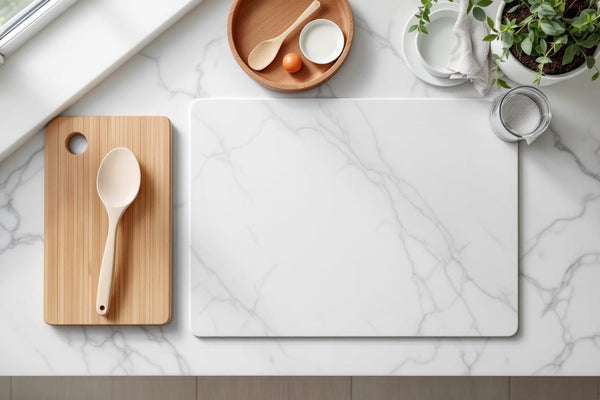
The Strabella Home Diatomaceous Stone Drying Mat (15.7×11.8 in) is a full-sized option designed for standard dish drying use next to the sink. At just under 16 inches long, it fits most single-sink setups without crowding the counter. The rigid format means it won't bunch or shift the way fabric mats can.
For smaller use cases — a soap dish, sponge, or toothbrush holder — the Diatomaceous Stone Sink Tray (12×4 in, Set of 2) from Strabella Home offers the same material in a narrower format, useful for organizing the sink edge without committing to a full drying mat footprint.
How do you clean a diatomite stone dish drying mat?
For routine care, wipe the surface with a damp cloth and allow it to air dry fully before using it again. If absorption seems reduced over time, lightly sand the surface with fine-grit sandpaper to open the pores. Avoid soaking or submerging the mat, as prolonged water exposure can compromise the stone structure.
Can a diatomite mat break?
Yes — diatomite is a compressed mineral material, not flexible, and it can crack if dropped or placed under significant impact. Handle it like you would a ceramic tile rather than a cutting board. Most diatomite mats are not suitable for households where countertop drops are a regular occurrence.
Microfiber Dish Drying Mats: Soft, Washable, Flexible
Microfiber mats made from recycled materials offer a softer landing for delicate dishes and glassware. They can be laundered in a standard washing machine on a gentle cycle, which makes them practical for households that prefer a single-step cleaning routine. The tradeoff is that fabric mats can retain odors or develop mildew if left damp for extended periods — regular washing (roughly once per week in active-use kitchens) helps prevent this.
Strabella Home offers these in specific colors. The Strabella Dish Drying Mat in Navy Blue and the Strabella Dish Drying Mat in Black are both super-absorbent, quick-dry, non-slip options — practical choices for kitchens where countertop aesthetics matter and the mat will be seen rather than hidden.
For households that use a coffee station or espresso setup, the Strabella Coffee Bar Mat offers the same material profile specifically sized and proportioned for a coffee bar layout — useful if you want to separate your dish drying area from your coffee prep area visually.
How often should you wash a microfiber dish drying mat?
In an active kitchen, washing once per week is a reasonable baseline. If the mat stays damp for more than a few hours at a time or develops any odor, wash it sooner. Use a gentle cycle without fabric softener — softener can reduce the fabric's absorbency over time.
Bamboo Drying Racks: A Related Option Worth Considering
Some shoppers searching for an eco friendly dish drying mat are also open to elevated drying racks made from bamboo — a rapidly renewable material. A bamboo rack lifts dishes off the counter entirely, which allows airflow on all sides and can reduce the countertop moisture issue that flat mats are designed to absorb.
The Bamboo Dish Drying Rack from Strabella Home is a 2-tier collapsible wooden drainer — a practical option for kitchens where counter space is limited and you want to put the rack away when it's not in use. A rack paired with a slim mat underneath is often the most effective combination: the mat catches drips while the rack maximizes airflow.
Best For: Matching the Right Mat to Your Situation
Best for fast drying with minimal upkeep
The Strabella Diatomaceous Stone Drying Mat (15.7×11.8 in) is the right choice if you want to set it down and largely forget about it. No laundering, no weekly wash cycle — just occasional wiping and air drying. Ideal for households where counter maintenance is a low priority but performance matters.
Best for households with delicate glassware or ceramic dishes
A soft microfiber mat — such as the Strabella Dish Drying Mat in Navy Blue — provides a cushioned surface that reduces the risk of chips or scratches on delicate items. Stone mats, while effective, have a harder surface that may not be ideal for thin-walled wine glasses or handmade ceramics.
Best for small kitchens with limited counter space
The collapsible Bamboo Dish Drying Rack paired with a narrow stone sink tray is a strong combination for small kitchens. The rack folds flat for storage, and the tray handles drips without taking up a large flat footprint. The Diatomaceous Stone Sink Tray (12×4 in, Set of 2) works well in this role.
Best for color-coordinated or styled kitchen counters
If the mat will be visible on the counter as part of your kitchen aesthetic, the Strabella Dish Drying Mat in Black or the navy version offers a clean, intentional look. These work particularly well in kitchens with dark countertops or minimalist styling where you want the mat to blend rather than contrast.
What to Watch Out for When Buying an Eco Friendly Mat
A few common issues worth knowing before you buy:
- Vague "eco" labeling: The term "eco friendly" is not regulated for kitchen textiles. Look for specific material descriptions — diatomite, organic cotton, recycled polyester — rather than relying on the label alone.
- Mold risk in fabric mats: Any fabric mat left consistently damp in a poorly ventilated kitchen can develop mildew. This is not a defect — it's a use condition. Hanging the mat to dry between uses significantly extends its usable life.
- Stone mat fragility: Diatomite mats are not indestructible. Check that your purchase includes any manufacturer care guidance and store the mat flat rather than propped upright where it could fall.
- Size mismatch: A mat that's too small for your drying area creates overflow drips onto unprotected counter surfaces. Measure the space next to your sink before ordering.
Is a diatomite dish drying mat better than a microfiber one?
It depends on your priorities. Diatomite mats typically dry faster and require less maintenance — no machine washing needed. Microfiber mats are softer, more flexible, easier to store, and gentler on delicate dishes. For most kitchens prioritizing low maintenance, diatomite is the stronger choice. For households with young children, rental kitchens, or limited storage, microfiber is often more practical.
Can I use an eco friendly dish drying mat on dark granite countertops?
Yes. Most diatomite and microfiber mats include a non-slip backing that sits safely on granite, quartz, and laminate surfaces. Look specifically for a non-slip base description in the product specs — not all mats include this, and a mat that slides on polished stone can be a nuisance in daily use. Both Strabella Home mat options explicitly include non-slip features.
Summary: Which Eco Friendly Dish Drying Mat Should You Buy?
For most kitchens in 2026, a diatomite stone mat offers the best balance of fast drying, low maintenance, and longevity — making it the default recommendation for homeowners who want something that works without requiring a weekly laundry routine. The Strabella Diatomaceous Stone Drying Mat at 15.7×11.8 inches covers most single-sink setups.
If you prefer fabric — whether for the softness, the washability, or the color options — the Strabella microfiber mats in navy and black are well-made options that hold up to regular laundering. And if counter space is the primary constraint, pairing a slim stone tray with a collapsible bamboo rack gives you maximum functionality in a minimal footprint.
The right mat is the one that fits your actual kitchen habits — not just the one with the most appealing product page.
Leave a comment